The Solomonic Dynasty lasted 1270 to 1974. Its capital was generally mobile, moving around northern Ethiopia until 1632. Then Emperor Fasilides decided to create a permanent capital on a high basalt ridge at Gondar, abandoning a previous indefensible encampment near the shores of Lake Tana. Gondar then grew in economic and cultural importance as well. But it declined after 1855. Addis Ababa became the capital in 1892. Gondar suffered attacks from various groups, including Sudanese Muslims, Italians, and British who liberated it in 1943.
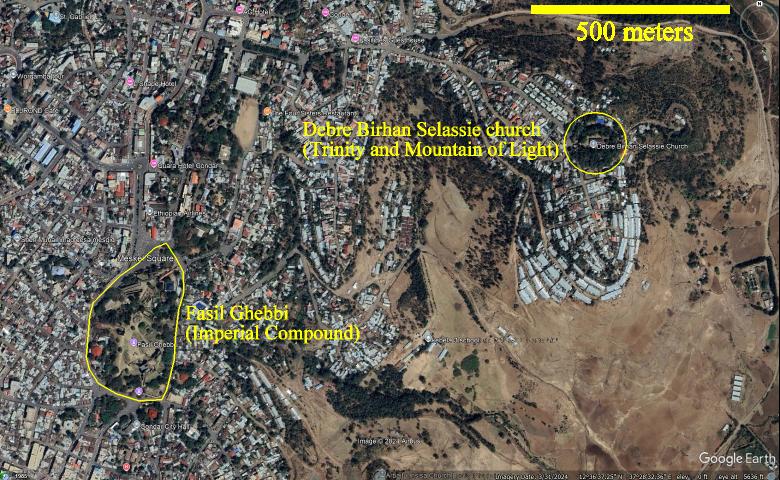
We visited two sites in Gondar: the imperial compound with its castles, and the Debre Birhan Selassie church. The locations are marked on this satellite view of part of Gondar.
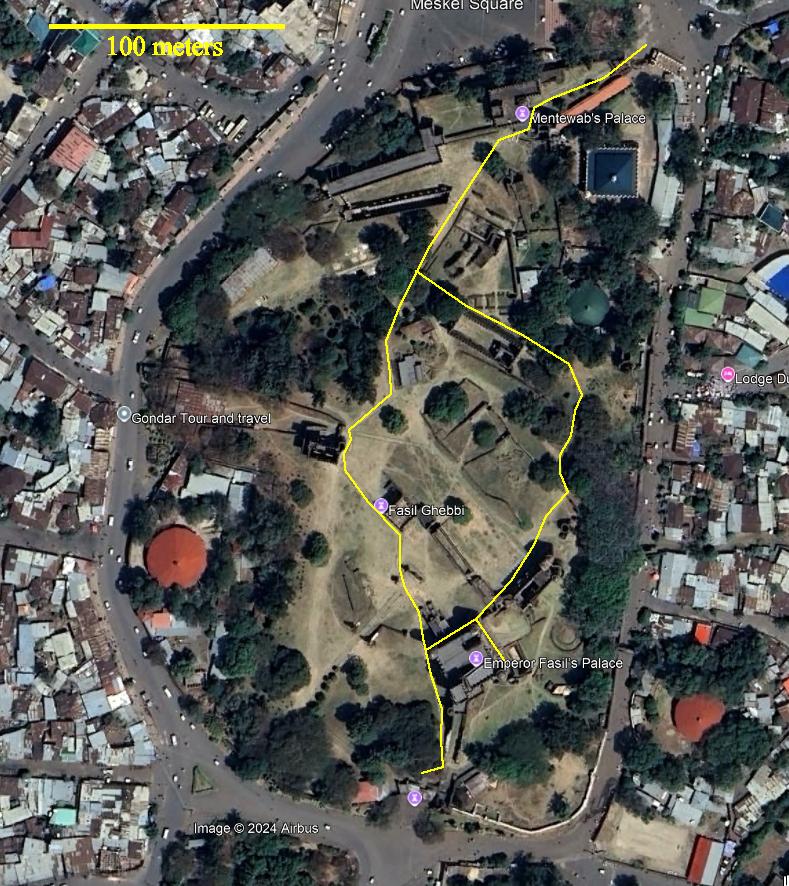
This enlargement of the imperial compound shows the approximate route of our walk, from the north entrance to the main palace castle in the south, and back. Much of the area is still being restored. There are building walls without roofs.
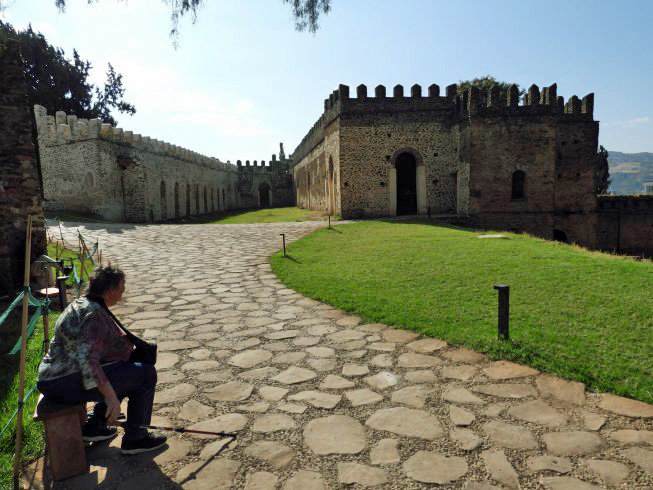
Walled ruins at the north end
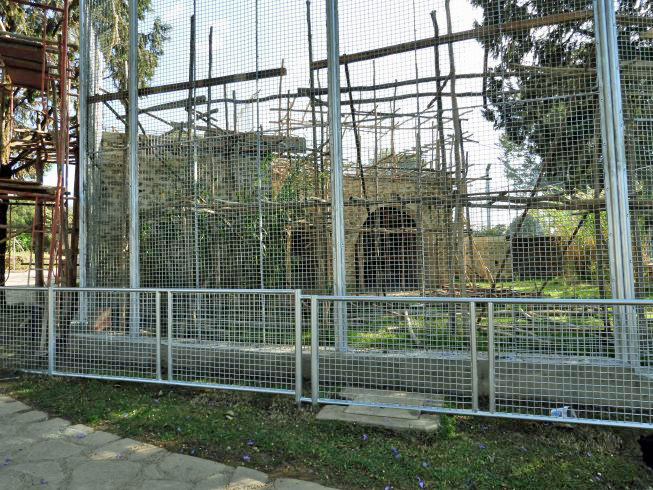
A future cage for lions
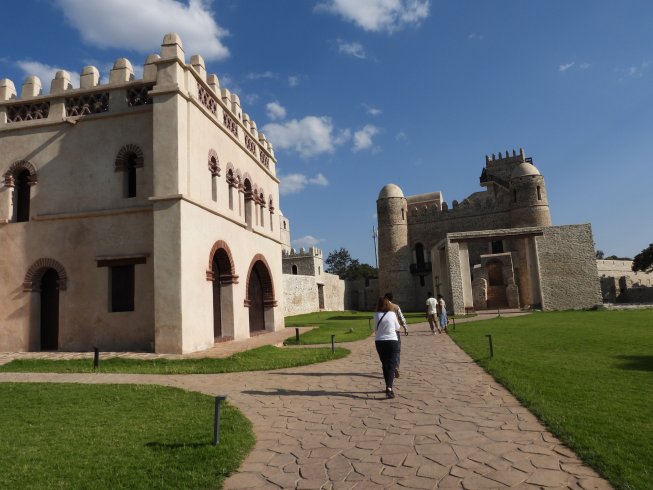
Walking past the lesser castles towards the main one in the rear
From the south looking at the line of castles from west to east:
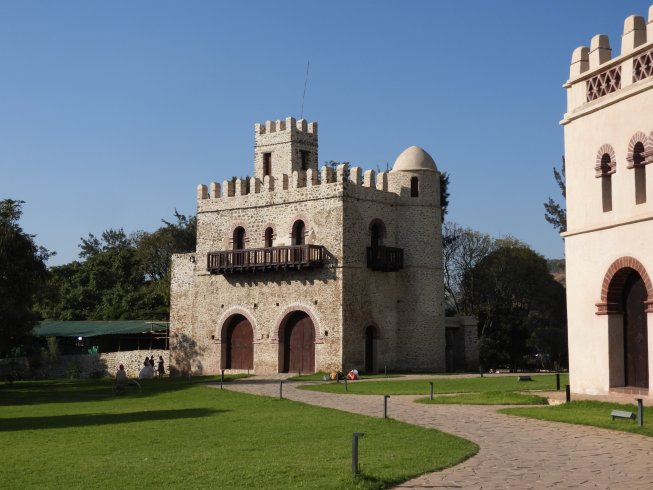
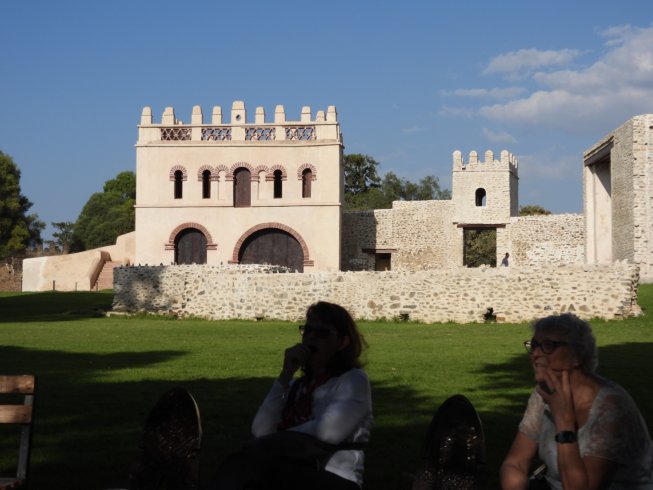
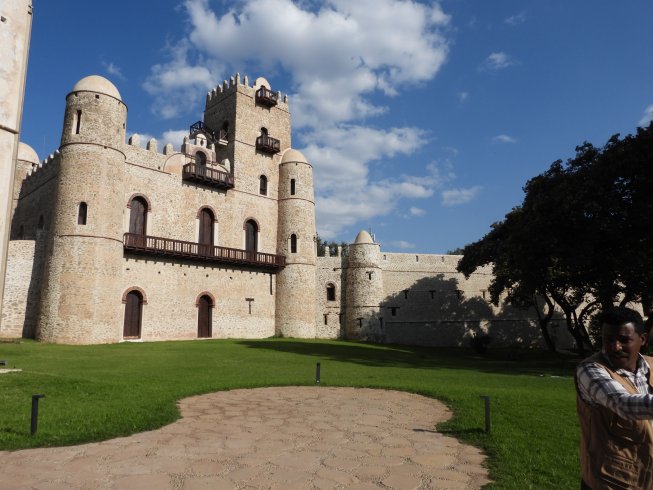
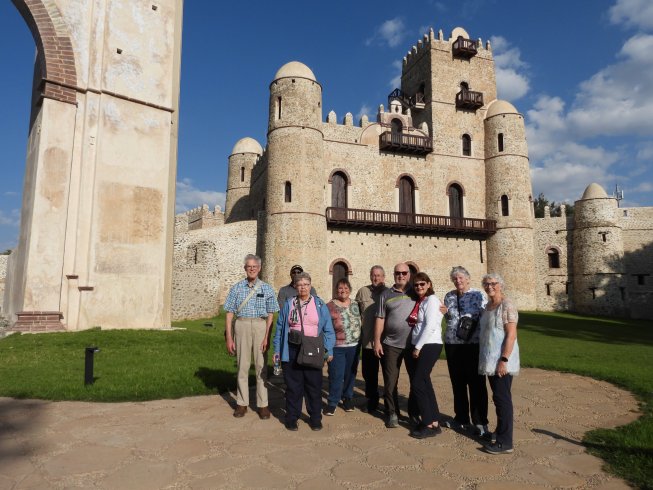
Then a group photo in front of the large castle of Emperor Fasilides (1632-1667):
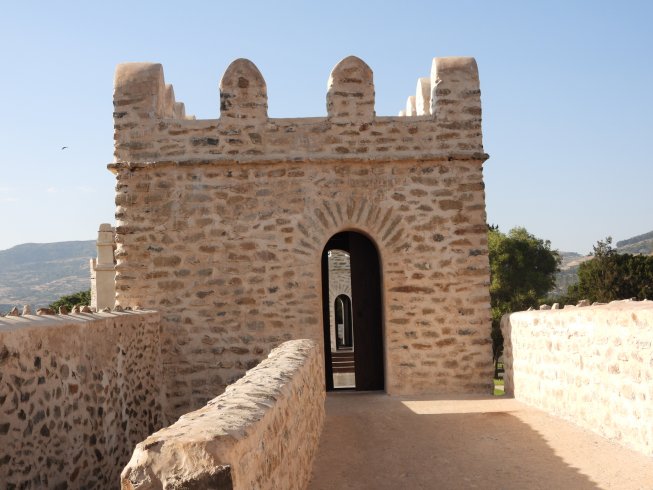
This view looks westward along the elevated walkway from the main castle towards the lesser castles, so that the emperor did not need to walk at ground level with the common people.
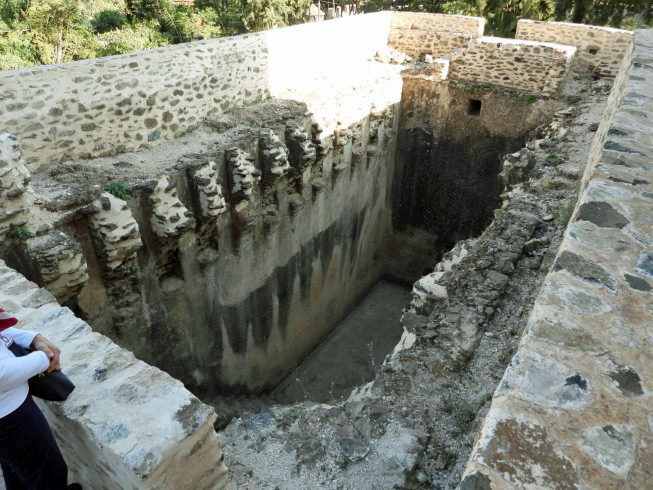
This is a deep cistern for storing water (and swimming?).
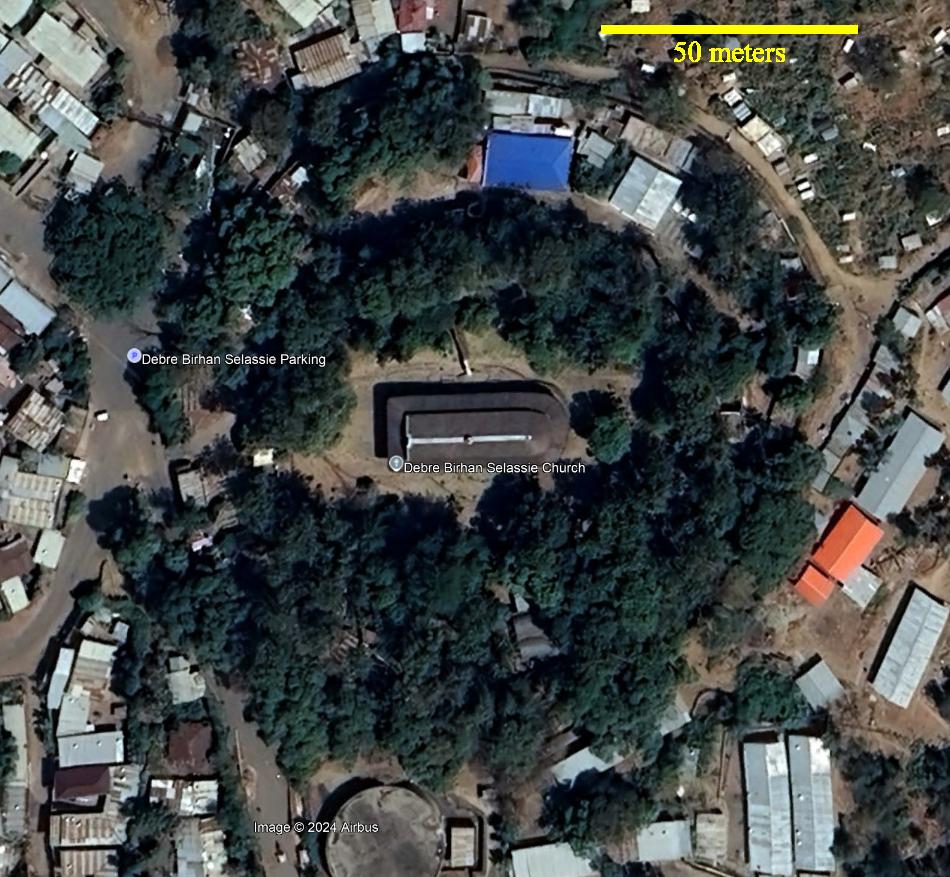
This is an enlarged satellite view of the Debre Birhan Selassie Church which has exquisite paintings inside for teaching Bible stories to illiterate people.
We entered from the west side through this gate:
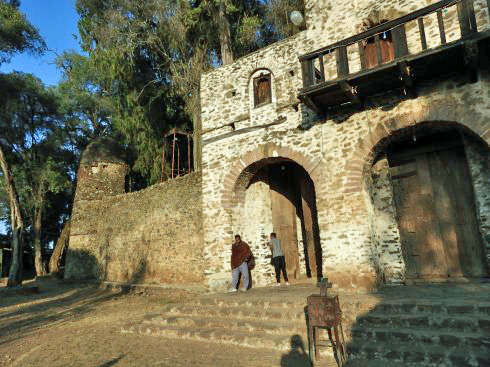
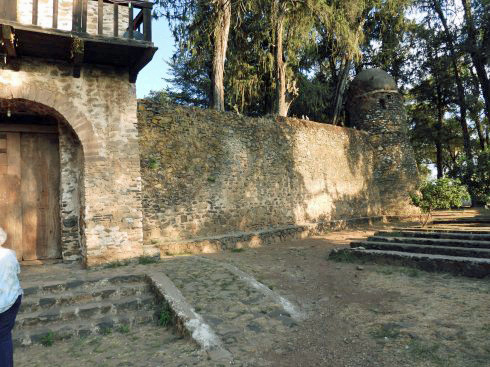
There are 12 of these rounded turrets (far left and far right) around the compound, representing the 12 apostles.
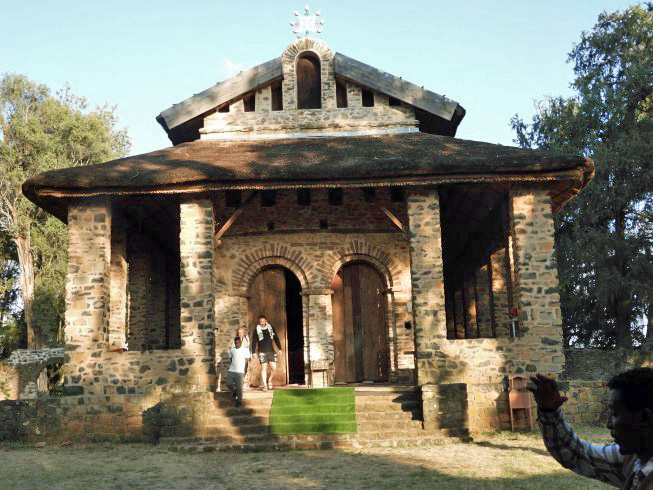
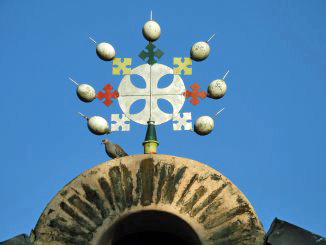
This is the church entrance and the cross on top of it.
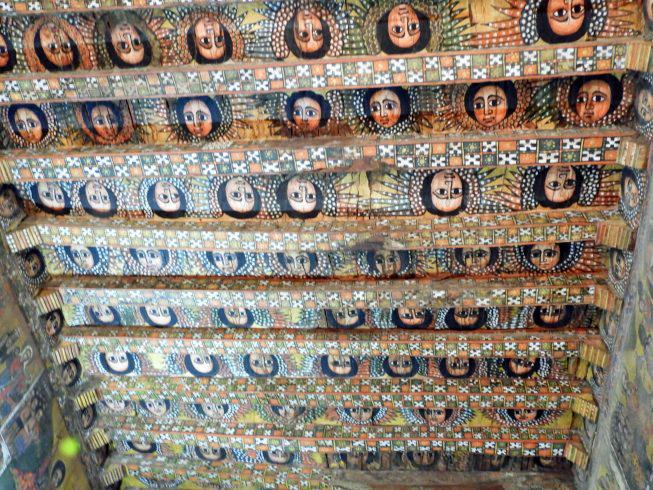
Inside the ceiling is covered with small heads representing angels watching from heaven.
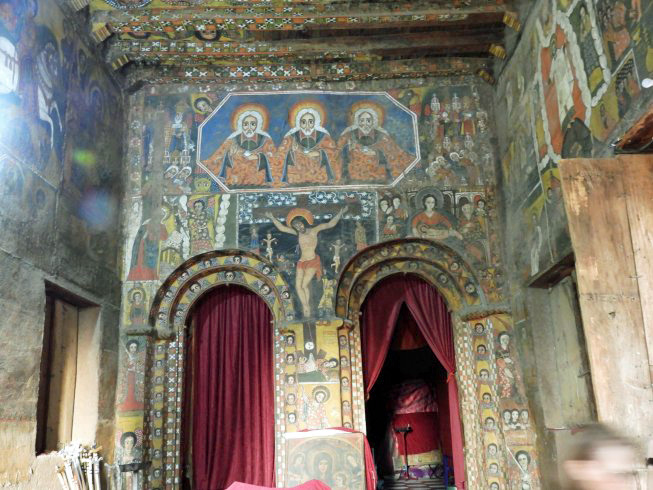
Though God cannot be correctly illustrated in artwork, in this style of Ethiopian Orthodox art the Trinity is represented by three nearly identical persons. Here they over look the crucifixion of Jesus.
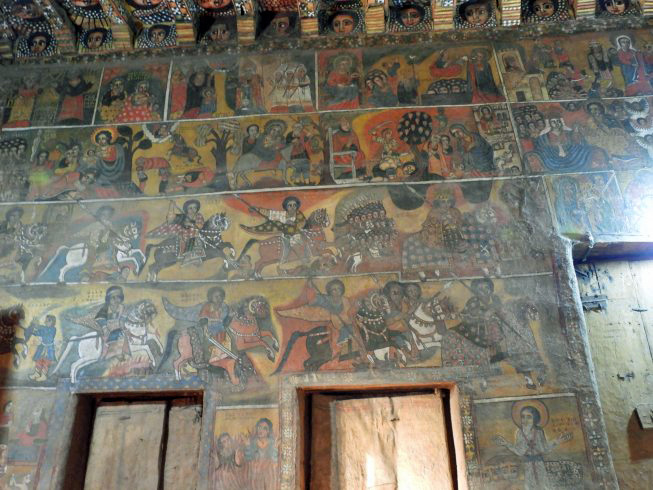
This part has a series of stories across the top. In the second line, at the right, it appears to illustrate the beheading of John the Baptist. The next two lines may illustrate the horsemen of Daniel and of Revelation.
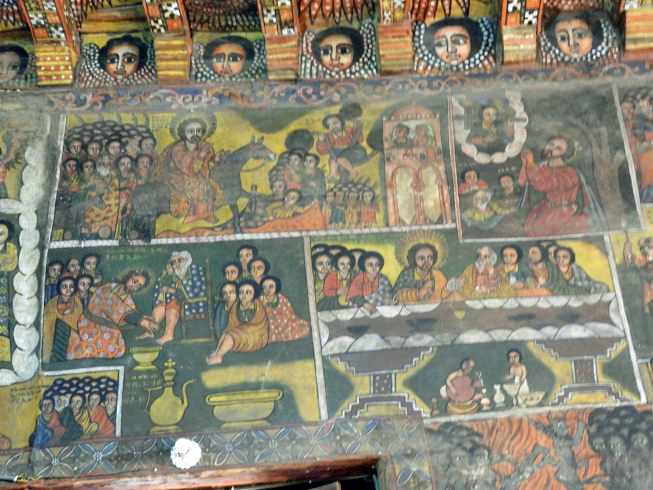
At the top left it appears to be the Palm Sunday ride of Jesus into Jerusalem. To its right is Jesus praying in Gethsemane. Below left is the washing of feet by Jesus. To the right is the last Supper illustration. In keeping with this art style, evil persons have their heads sideways showing only one eye, whereas good people have faces forward with two eyes showing. So Judas is in the middle of the right cluster of disciples.
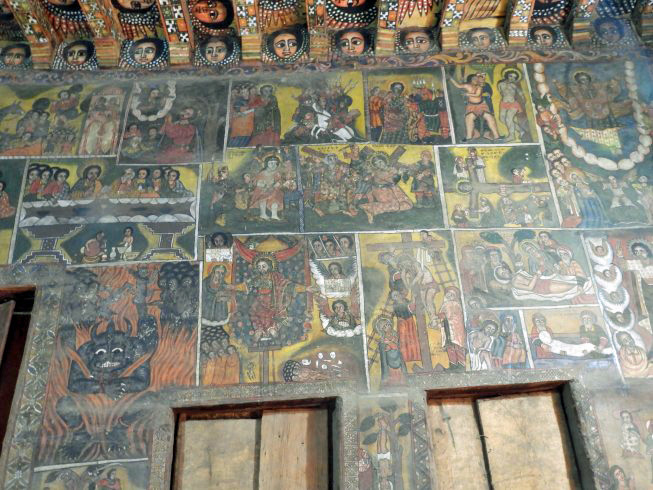
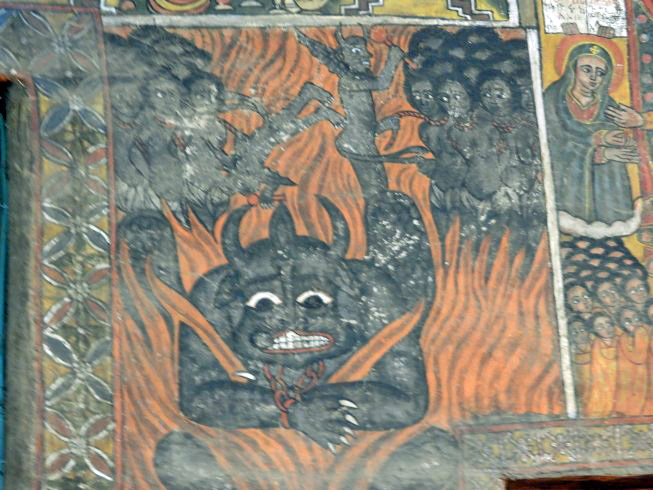
To the right of those paintings, the series continues with the arrest and torture of Jesus, going to Golgotha, crucifixion, taking the body down and burying it. A bottom center scene may be a resurrection appearance. To the lower left is this next scene representing Hell.
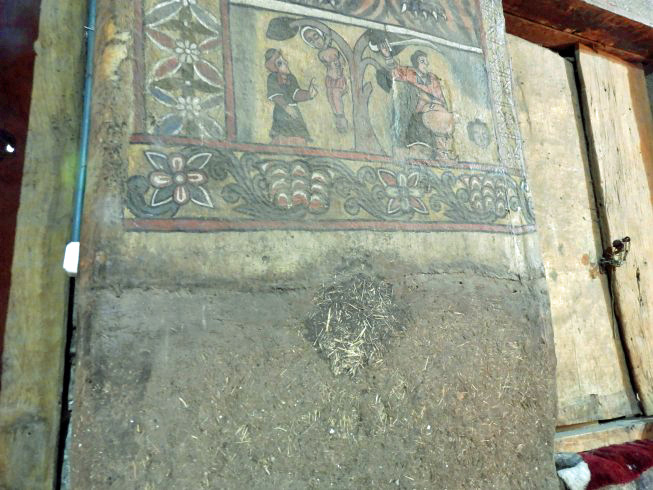
The top of this panel appears to show the killing of Absalom, ending the coup against king David.
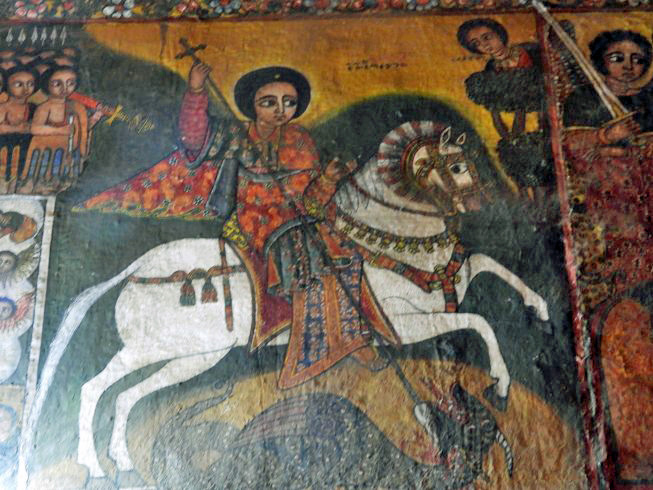
St. George killing the dragon is a favorite theme in Ethiopia and elsewhere.
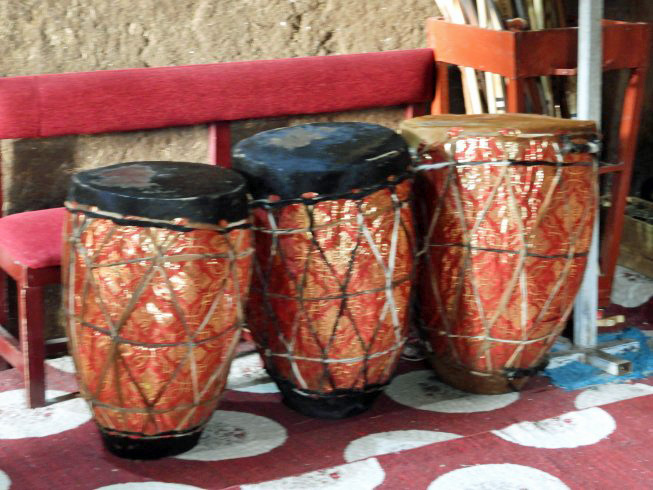
These drums are used for worship.
Navigate to other topics:
Home,
Rocks,
Pre-Axum,
Axum,
Lalibela,
Gondar,
crosses,
Palace Museum,
Cultural Dinner,
Hossana,
Synods,
dwellings,
transport,
Ethiopian Birds