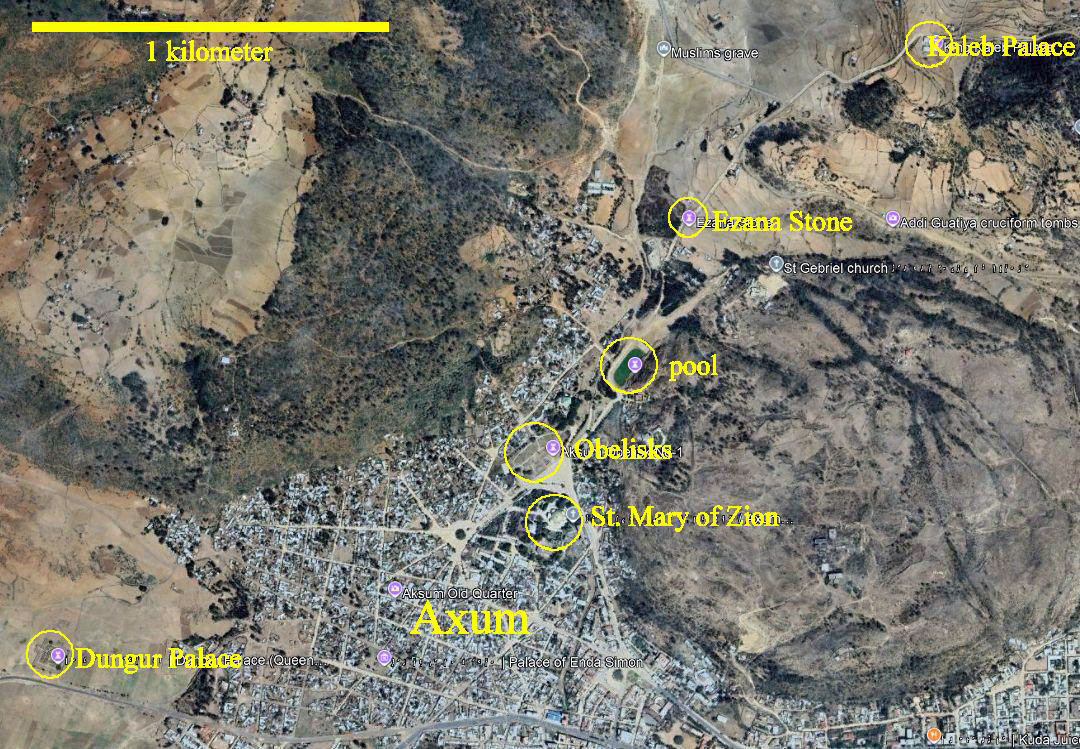
Multiple photos of some of these sites will be on separately linked pages, with returns to this page provided at their bottoms.
During the previous thousand-year period, with various ties to Israel tribes (like Dan) and Jewish leadership (kings after Solomon), it is to be expected that there was significant trade and government relations between tribal groups in Ethiopia and those remaining in Israel. In Acts 8:26-40 an Ethiopian government official is likely returning home after visiting Jerusalem for one of the special festivals there. He would be of Jewish descent or a convert to Judaism and therefore knowledgeable about the Bible. Indeed, he or his government was rich enough to possess a scroll of Isaiah and was reading it. The time was about 35 to 42 A.D. Ethiopian Christians trace the start of their faith to this event with Philip the evangelist. The nation was declared Christian by King Ezana about 300 years later. The Acts 8 time period is also similar to the consolidation of the Kingdom of Axum in northern Ethiopia at the begining of its rise to being a regional power comparable to those of Rome, Greece, Persia, India, and China.
Though Axum was the capital of a major empire for about a thousand years, very little of Axum has been excavated archaeologically. We visited sites shown on this Google Earth satellite view of the north part of Axum.
Multiple photos of some of these sites will be on separately linked pages, with returns to this page provided at their bottoms.
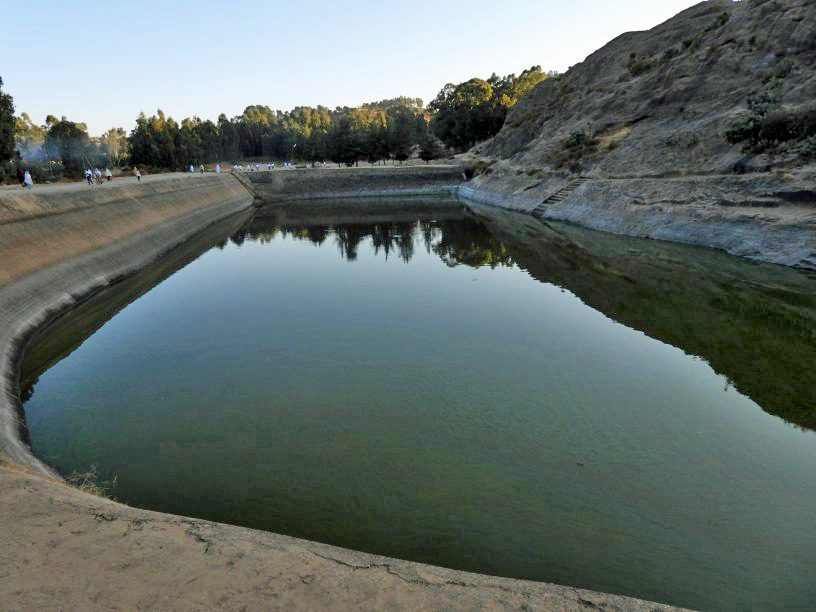
This is a very old and deep pool that fills in the rainy season. Its size is viewable in the satellite image above, and the photo scale is partly revealed by the size of people in the upper left.
King Ezana about 320s to about 360 A.D.
King Kaleb 514 to 534 A.D.
Navigate to other topics:
Home,
Rocks,
Pre-Axum,
Axum,
Lalibela,
Gondar,
crosses,
Palace Museum,
Cultural Dinner,
Hossana,
Synods,
dwellings,
transport,
Ethiopian Birds