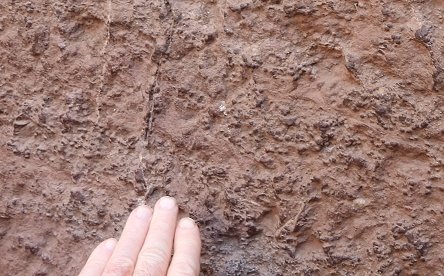
 an old vertical carved surface
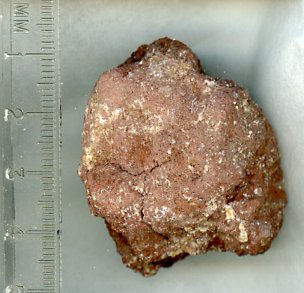 a pebble from a pathway of broken rock
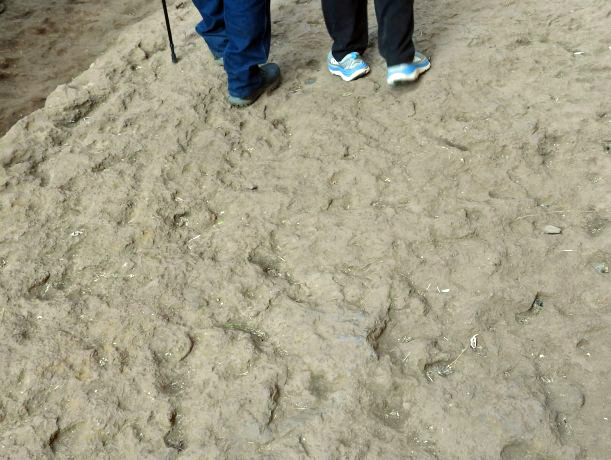 a rough walking surface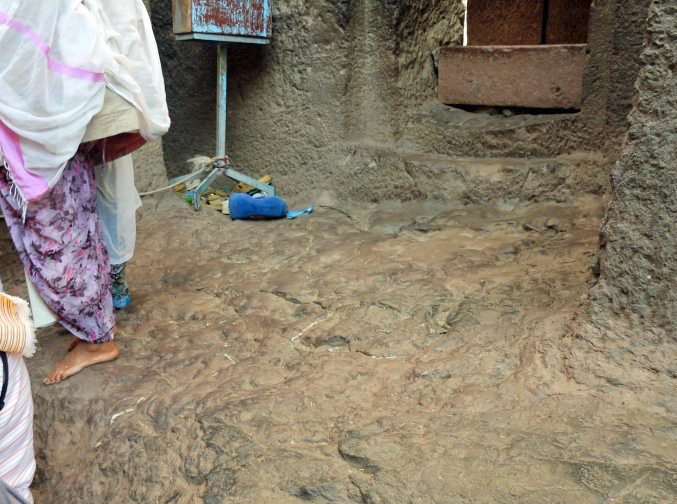
The church entrance: irregular but polished smooth by millions of feet over centuries (likely slippery when wet).
The volcanic rock from which the churches were carved is reddish and fine-grained. The surfaces on which we walked tended to be smooth from abundant wear to irregular and rough. Some paths were more gray from accumulated dust and dirt. In some places the walkways were on broken stones and pebbles. The next images illustrate the variety.
an old vertical carved surface
a pebble from a pathway of broken rock
a rough walking surface
The church entrance: irregular but polished smooth by millions of feet over centuries (likely slippery when wet).
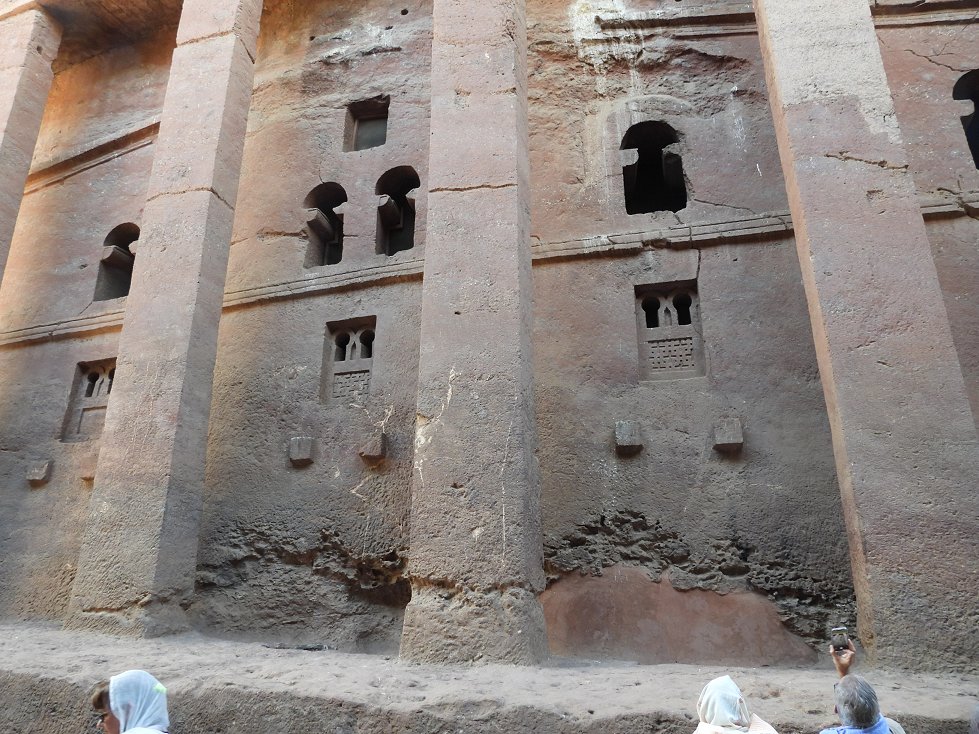
The rear of the large Medhane Alem church has intact columns, wall, and windows, but with cracks and crumblings from centuries of weathering.
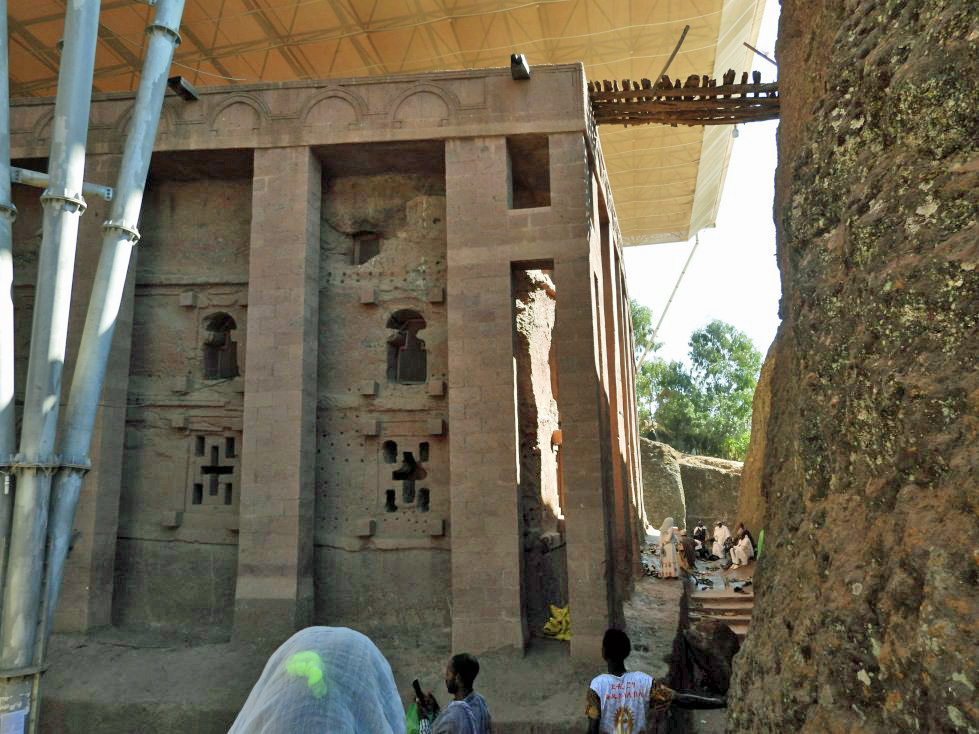
In this corner of the church, fallen columns have been replaced by stacked blocks. Behind, the walls have partly crumbled. At the left are metal supports for the canopy (very top) that now protects the stone church from rain.
Three interior views follow, showing the interior carved columns and vaulted ceiling.
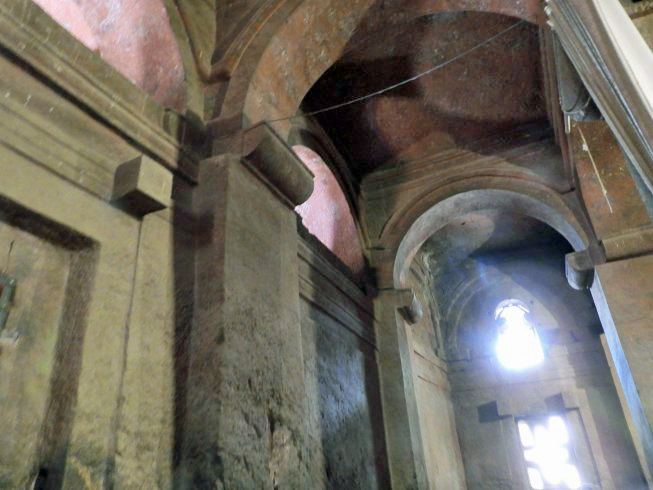
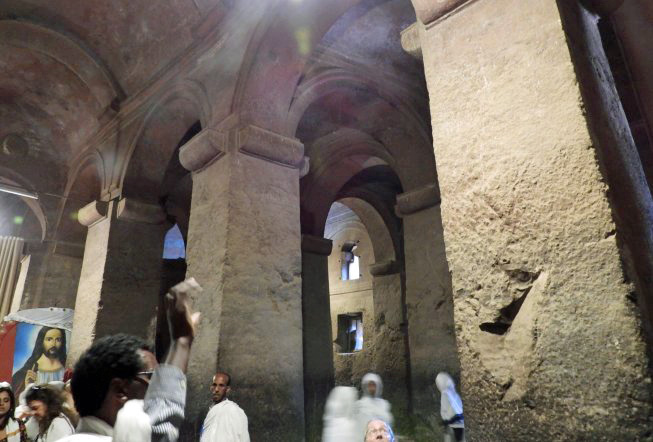
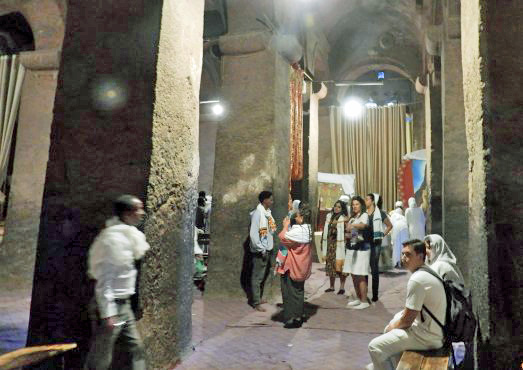
Throw-rugs are on the floor, and no shoes are allowed inside.
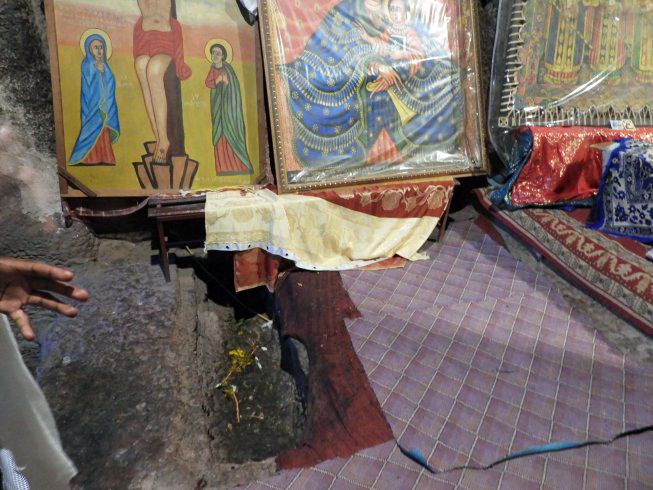
Paintings and floor coverings
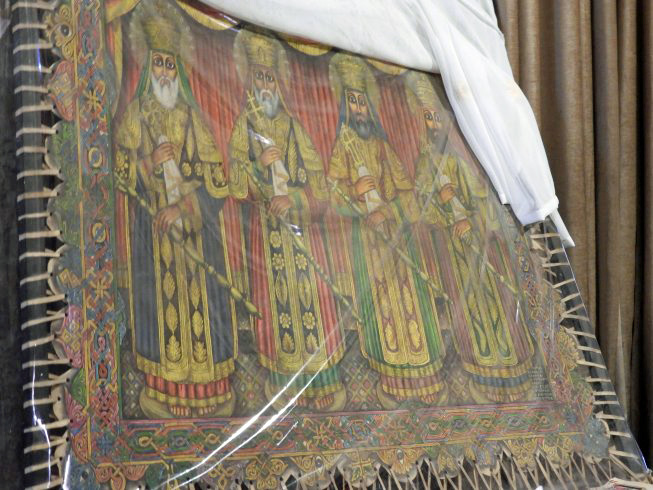
An old painting (on stretched canvas?) protected by plastic and cloth
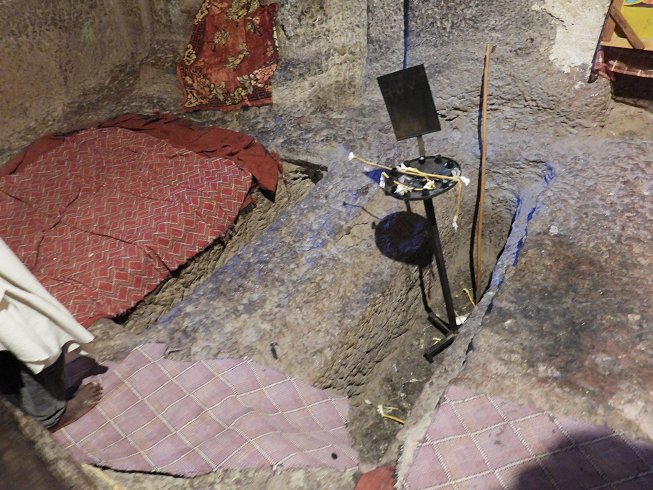
A pit for water baptisms
or
Navigate to other topics:
Home,
Rocks,
Pre-Axum,
Axum,
Lalibela,
Gondar,
crosses,
Palace Museum,
Cultural Dinner,
Hossana,
Synods,
dwellings,
transport,
Ethiopian Birds